2026-06-07T02:02:20-05:00

Our conscience is paramount; we are to follow it, doing what it tells us, knowing that through it, God is indirectly speaking to us, encouraging us to do what we know (or at least believe) to be good.  We are, by nature, good, good because God made us good, and our conscience is a way for us to engage our innate good nature, to let it direct us, making sure we make the best decisions possible. The problem is  we... Read more

2026-06-04T01:59:45-05:00

One of the dogmatic teachings of the Catholic Church, a teaching which was  officially defined at the Fifth Lateran Council (1512-1517), but believed before then, is the immortality of the soul. We told told that when we die, we do not cease to exist; there is a “part” of us, named the soul, which continues to “live on.” Thanks to the way death is influenced by sin, when we die, our soul finds itself in an imperfect situation, as it... Read more

2026-06-02T10:50:53-05:00

Abraham, the “father” of three religions, Judaism, Christianity, and Islam, was a man of great faith, but also a man of his times. God worked with him in accordance to his context, slowly teaching  him to move beyond the cultural norms which he had been given, as St. Cyril of Alexandria noted: Since Abraham was of the Chaldean race, and had only recently come out from the place, the Master of all instructed him by way of accommodation to perform... Read more

2026-06-01T02:23:23-05:00

Like many others, I was surprised to find that the most recent papal encyclical, Magnifica Humanitas, quoted J.R.R. Tolkien, and not just Tolkien, but a character from his books, Gandalf.  It is not something I normally would expect to be included in an encyclical,  even if the content of the words are encouraging, because it comes from a work of fiction:  The twentieth-century Catholic author J.R.R. Tolkien, in the words of a protagonist in one of his novels, described our... Read more

2026-05-31T01:15:27-05:00

Everyone is called to the kingdom of God. Everyone can even experience it, at least in part, during their lifetime. Christ tells us that the kingdom of God is at hand; it can even be said to be within us. As Christians, we opened up to it, found ourselves in it, through our baptism, when we became a part of the body of Christ. The kingdom of God is not just for us. Christ draws everyone into himself so that... Read more

2026-05-28T02:10:59-05:00

No matter our diverse backgrounds, with different cultural, religious, and even moral understandings, we should be working together to promote the common good, recognizing the good which we hold in common. This, in part, comes from our nature. It is good and its goodness influences us, even when we divert from it. Thus, while humanity is, by nature, good, this does not mean we are perfect. Most of us have not actualized our natural potential. Most of us act in... Read more

2026-05-27T01:22:11-05:00

Sin creates structures in society. When those structures, and the sin behind them, are not resisted,  they lead to the creation of tyrannical states, states where authoritarian rulers ignore the common good as they seek to gain and maintain control. One of the reasons why the saints are looked up to and recognized by Christians is that they actively resisted those structures of sin, one way (such as through ascetical struggles, resisting the sin that they are tempted to do),... Read more

2026-05-26T10:16:00-05:00

Becoming the Monsters We Fight The ends do not justify the means. Those who resist evil must not embrace the way of evil themselves. For if they do so, they do not eliminate the evil; they only change who does the evil. We must not become the monsters we fight. This is why it is important for us to love our enemies; when we resist evil, we must always remember our purpose or goal is not to destroy or annihilate... Read more

2026-05-24T01:55:13-05:00

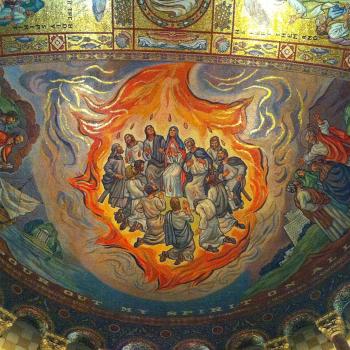
Sin turned humanity against itself, having people divided into various smaller groups of people who were unable to properly understand and work with each other. This was one of the points of the story of the Tower of Babel; in it, we see how pride makes humanity unable to hold itself together as one, but rather, it has people divide up into groups which eventually end up warring against each other.  At Pentecost, with the coming of the Holy Spirit... Read more

2026-05-21T01:54:46-05:00

Christians are meant to live what they believe and not just treat their faith as some sort of thought exercise. Yes, we are to explore our beliefs, and our faith is supposed to be a faith seeking understanding, but to do that properly, we must engage those beliefs, proving them through our actions. For those of us who are more contemplative in nature, it is all too easy for us to get so caught up in the pursuit contemplation that... Read more

Follow Us!


TAKE THE
Religious Wisdom Quiz

Who became David's closest friend, even though he was Saul's son?

Select your answer to see how you score.


Browse Our Archives